How to Take a Pool Water Sample Worth Testing
Most confusing test results trace back to the sample, not the pool, and a few small habits fix that.
October 27, 2026 · 4 min read
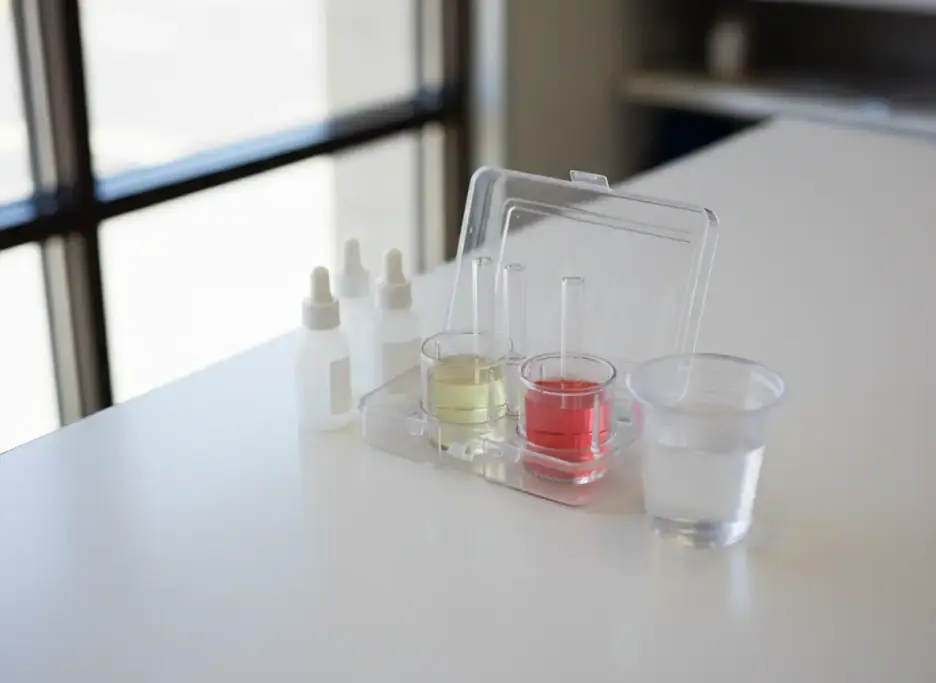
A water test can only describe the water you hand over. Pool owners walk up to the counter with a sample scooped off the surface, left on a truck seat in July for three hours, or poured into a jar that used to hold pickles. The numbers come back strange, the advice that follows doesn't fit the pool, and the pool owner gets frustrated with a result that was never fair to begin with. A good sample takes about two minutes and a clean bottle. Here's how to get one.
Start with a clean container and a tight lid
A new water bottle with a screw cap is the easy answer. Rinse it out two or three times with your own pool water before you fill it for real, so the bottle is matched to what's going in. Skip anything that ever held soap, juice, milk or cleaning spray. Even a thin film of leftover residue can change what a sanitizer or pH reading shows, and you won't be able to see it.
Please don't use the bucket from the garage either. Buckets pick up a coating from every chemical and rinse that ever sat in them, and that coating goes straight into your sample. A bottle that costs a dollar beats a bucket every time.
Reach down to about elbow depth
The top of the water isn't the whole pool. Sunscreen, pollen, bugs and oils collect at the surface, and sanitizer levels up there can read differently than the rest of the water. Turn the bottle upside down, push your arm in to about elbow depth, then flip the bottle right side up and let it fill. If you can, cap it while it's still under the water so no air or surface film sneaks in.
Pick your spot with care. Stay away from the return jets and the skimmer. Water pouring out of a return may have just passed through the equipment and picked up fresh chemical, while water parked beside a skimmer can be stale. A spot along the wall, a few feet from any fitting, gives a much more honest picture of what your swimmers are sitting in.
Collect before you add anything
Timing matters more than most people expect. If you shock the pool Saturday morning and bring a sample in Saturday afternoon, the reading describes a pool that no longer exists. Take the sample first, before you add any chemical, and before you turn on a fresh batch of anything. If you did already add something, that's fine, just say so. It changes how the numbers should be read, and the person at the counter can account for it.
Write a few things down before you leave the house
A test result is more useful with context. Jot a few notes on your phone or on the back of an envelope and bring them along:
- Whether the pool is above ground or in-ground, and roughly how many gallons it holds if you know
- Whether you run chlorine or a salt system
- What you've added over the last week or two, and about when
- What the water looks like right now: clear, hazy, green, brown or milky
- Anything that bugs you, such as itchy skin, stinging eyes, a strong chlorine smell or stains on the liner
That short list turns a page of numbers into a plan. Two pools can show the same pH and need completely different next steps, because one has a sand filter that's two seasons overdue and the other has a salt cell that's tired. The details are how the right fix gets found.
Keep it shaded and bring it in soon
Chlorine fades in sunlight and heat, and a Georgia summer afternoon is rough on a bottle sitting in a parked car. Keep the sample out of direct sun, set it in the cup holder or in a small cooler, and bring it the same day if you can. A sample that sat overnight on the porch isn't going to match the pool anymore. If you can't get to the store right away, take a fresh sample instead of carrying an old one around.
What to ask when you get the results
A water test usually looks at things like sanitizer, pH, alkalinity, stabilizer and hardness, though it's fair to ask what each result means for your specific pool. A reading on its own is just a number. What you want is the story: which of these is off, which one to fix first, and what to expect after you do. Most pool problems stack on top of each other, and fixing them in the right order saves you product and a lot of second-guessing.
Bring it by the store
Elite Pool Store tests water for free for all swimming pools, so there's no reason to guess. Stop in at 6337 US-19 in Zebulon with your bottle and your notes. The store is open Monday through Friday from 9 to 6 and Saturday from 10 to 4, and closed Sunday. Winter hours can vary, so call (470) 945-4340 first if you're coming in the colder months. Bring a clean sample, tell us what's been going on, and we'll sort out the rest together.
Elite Pool Store, (470) 945-4340
Call (470) 945-4340More articles
Cloudy vs Green Pool Water: Clarifier, Shock or Algaecide?
Reaching for the wrong bottle costs you a week, so it helps to know which problem you're actually looking at.
Signs Your Pool Pump Seal or Motor Is Going
Catching a leaking shaft seal early can save the motor, and a few details on the nameplate make the parts search quick.